We may earn commission from links on this page, but we only recommend products we love. Promise.
Hi, friends!
You're tired, you can't sleep, you're anxious for no reason, your muscles hurt, and you don't even work out that hard. I spent an embarrassing amount of time convinced something was actually wrong with me. Turns out I was just magnesium deficient like every other woman who's been running on fumes since 2015. Cool!
Why magnesium ended up being worth it for me:
It calms your nervous system down without making you feel drugged or weird
My sleep stopped being that fake sleep where you wake up more tired
The background anxiety dialed down. Not gone, just… not running the show
My body stopped feeling tight for no reason, like I’d been clenching all day
Many people don’t get much magnesium from food alone anymore, which makes supplementation useful.
What I Use:
I take magnesium glycinate at night.
If my body feels tight, I’ll do a bath with flakes.
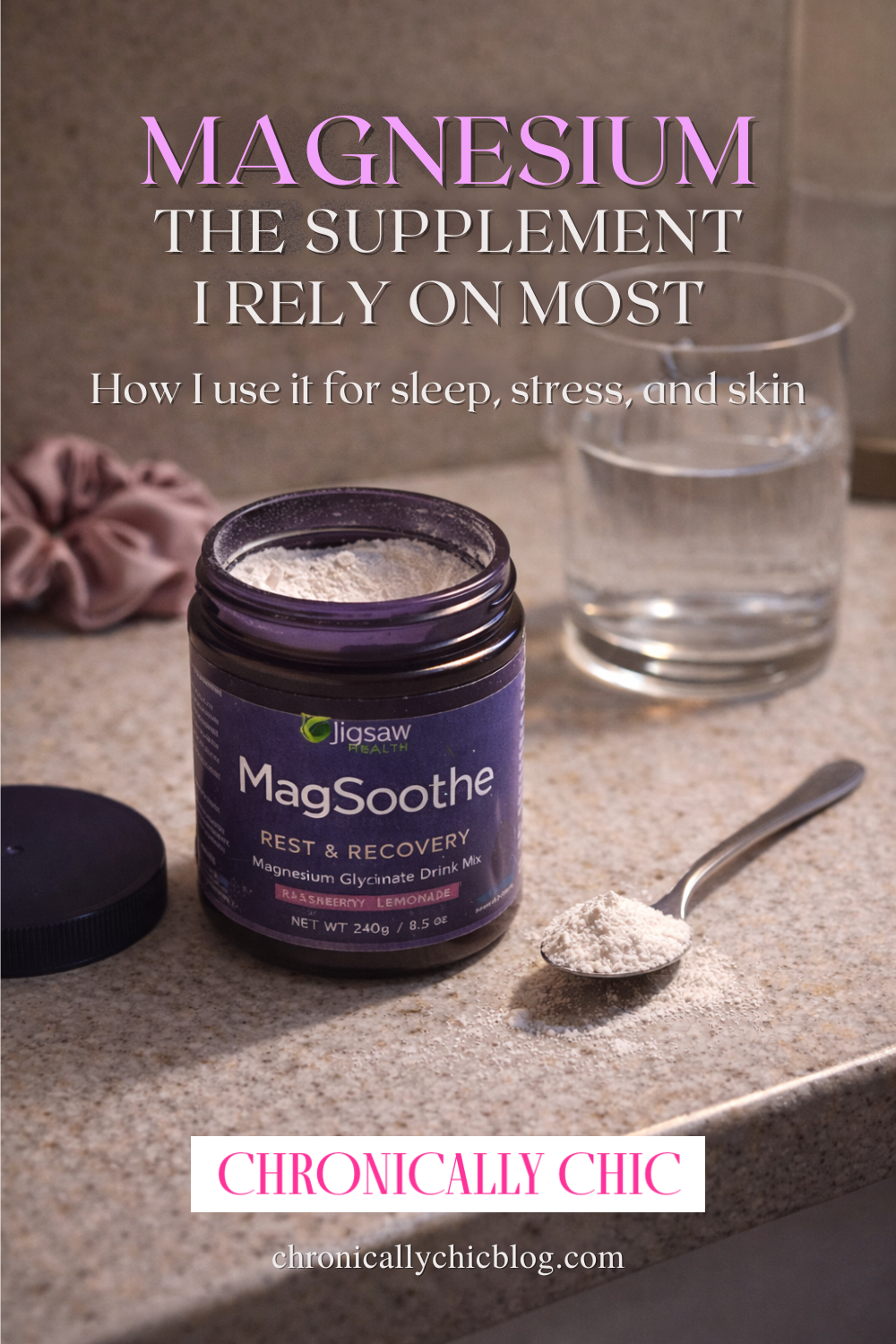
MagSoothe is just the drink version, so I’ll use that instead sometimes.
Magnesium for your Mind
Magnesium is the only thing that consistently stops the overthinking spiral for me. It doesn't make me feel out of it or sleepy, it just stops that weird, racing-brain feeling I get at night. I noticed that after a while, I wasn't getting as stressed out by small stuff and could actually sit still and focus. If you feel like your head is constantly spinning or you're just constantly on edge, you’re probably just short on magnesium.
Here’s what I’ve noticed over time:
Less anxiety spiraling over texts you sent 4 days ago.
Falling asleep faster instead of rearranging your living room at 2 a.m.
Better focus without having to chug 3 coffees.
“I genuinely thought I was just an anxious person. I was not.”
I notice a huge difference when I stay consistent. It’s like the mental version of running out of dry shampoo. You can go without it, but at what cost?
Magnesium for Your Body
If you work out:
Magnesium helps your muscles contract and relax properly, so if you’re sore forever after leg day, or you cramp up during Pilates, it’s not just age, it might be low magnesium. It also plays a role in energy production, so it helps you have the stamina to work out in the first place.
If you deal with cramps or tension
Listen. I have tried everything for cramps, but magnesium has helped me more than most prescriptions. It relaxes the uterine muscles (bless), so cramps, headaches, and bloating don’t ruin my day.
If you deal with inflammation or blood sugar drama:
If your energy crashes after meals or your skin is constantly irritated for no obvious reason, inflammation and blood sugar swings are often part of the picture. Magnesium helps with insulin sensitivity and blood sugar regulation, which is huge if you crash after meals or constantly crave sugar.
“Apparently “I’m just a mess” is sometimes a mineral deficiency.”
Magnesium for Your Skin & Beauty Routine
When I’m consistent with magnesium, my skin looks calmer, and my eyes aren’t as puffy in the morning. When I fall off for a while, little stress flare-ups start showing up again. Magnesium influences stress hormones and inflammation, which both show up on your skin whether you like it or not.
Plus, low magnesium has been linked to increased free radical damage (aka aging).
For more on this: How to Repair Your Skin Barrier (Without Having a Mental Breakdown in the Process)
The Different Types of Magnesium (And What They’re For)
There are many types of magnesium, and they all do slightly different things. Here's the magnesium cheat sheet so you don’t buy the wrong one:
“Once you find the right kind you’ll be annoyed it took you this long.”

Kacie-Approved Magnesium Picks
Here’s what’s in my rotation right now, and why I love them:
Magnesium Bath Flakes
My holy grail for winding down at night. These are basically Epsom salts on steroids. I throw them into a warm bath with a little lavender essential oil and soak until my soul floats. Perfect for sore muscles, cramps, and general life overload.

Jigsaw Health MagSoothe
This is the one I take when my brain is still arguing with itself at midnight. This tastes like raspberry lemonade and helps your nervous system chill without sketchy additives. It’s got magnesium glycinate (super gentle on the gut), and honestly? You’ll sleep more deeply, wake up less puffy, and feel less like a stressed-out gremlin by morning. If I had to pick one form I keep coming back to, it’s magnesium glycinate. This is what I reach for when I don’t feel like swallowing another pill.
How to Add Magnesium to Your Routine

You don’t need to do everything. This is what’s worked best for me:
Nighttime: Take magnesium glycinate 1-2 hours before bed (It helps with sleep and muscle relaxation).
Workout recovery: Use magnesium flakes in your bath post-sweat.
Daily beauty boost: Mix a hydration powder with magnesium into your morning water or tea.
PMS week: Double down with both topical (sprays, baths) and oral magnesium.
Start slow, listen to your body, and adjust. Some people feel the benefits in a few days. Others need a week or two of consistency. But when it does kick in? You’ll wonder how you ever lived without it.

Hydrate like you mean it.
Plastic cups? Never heard of her. This 16 oz cutie turns lemon water, sparkling mineral water, collagen sips, and every beauty-boosting ritual into a whole moment.
Picture it: on your nightstand next to your silk pillowcase, on your desk while you plot world domination, or by your vanity as you do skincare that costs more than your car payment (no judgment). She’s practical but still Instagram-worthy, exactly our vibe.
💧 16 oz of chic — because you’re fancy but still thirsty.
💧 Real glass, real glam — no sad plastic.
💧 Treat her nice — hand wash only; she’s delicate but worth it.
Made to order — ships within 4–7 business days.
Why I Keep Coming Back to Magnesium
Magnesium supports multiple systems at once, which is why it’s stuck around in my routine. It’s not a cure-all, it’s just one of those foundational things that makes everything else feel easier to manage.
Magnesium supports your mind (calm, clarity, mood), your body (muscles, hormones, sleep), and your beauty (skin, hydration, inflammation).
So yes, magnesium is still invited to the Sleepy Girl Mocktail party. But now, she’s also headlining your beauty cabinet, your supplement drawer, and your stress toolbox!
If you’re tired of guessing what’s wrong with you and buying random things that don’t work, I track what actually sticks.
Sign up for the Chronically Chic newsletter and be the first to know what’s working, what’s not, and what’s in my cart this week.