Do LED Face Masks Actually Work? My Results After 4 Years
We may earn commission from links on this page, but we only recommend products we love. Promise.
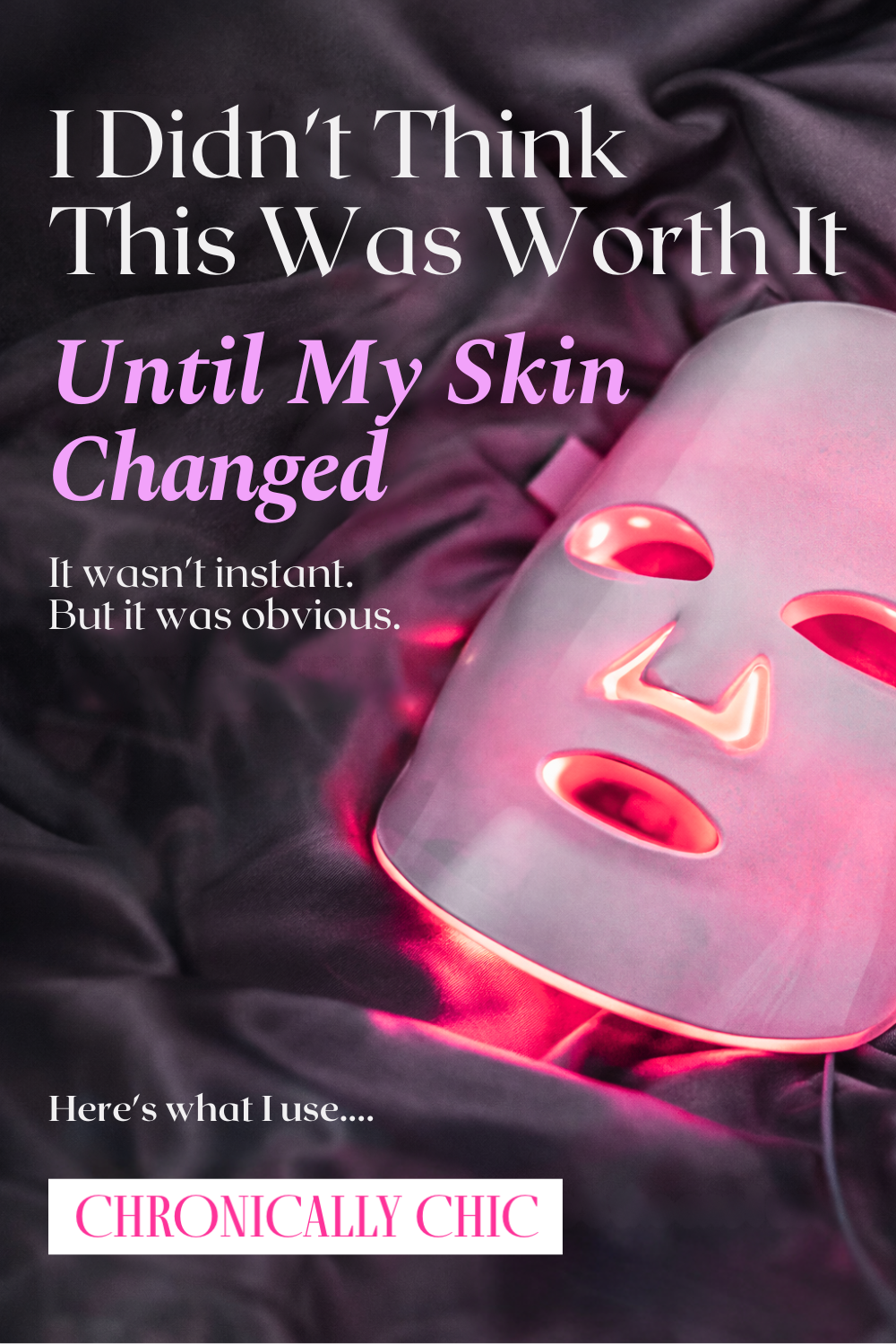
I’ve used LED face masks for four years, including an expensive one that broke and a cheaper one that didn’t. In 2022, I dropped a small fortune on a “luxe” LED mask that died on me after less than a year. No warning, no low-battery beep, just poof… dead. Meanwhile, the budget-friendly Amazon version I picked up as a backup? Still going strong over three years later, with seven colors instead of three.
✨ Spoiler: You don’t need to spend $400+ to get glowy, bouncy skin.
Here’s the LED mask I use that won’t ghost you in under a year: Grab it here!
TBH: Skip LED masks entirely if you’re not going to use them at least 3 times a week. Consistency matters more than brand, price, or light color.
The Lowdown on LED Masks: How Do They Actually Work?
Yes, they look absolutely insane. The first time I saw one, I was like, what in the world is happening right now? But I'm telling you, they actually work, and now I use mine all the time. It’s really simple. Different wavelengths of light interact with your skin at different depths, which is why each color does something slightly different.
Red light goes deeper into the skin and supports collagen production. Over time, that’s what helps with fine lines, texture, and that “you look more awake” thing people can’t quite place.
Blue light targets acne-causing bacteria on the surface of the skin, which is why it’s usually the go-to if you’re breaking out.
Green light is usually used for pigmentation and overall tone. Think dark spots, uneven patches, that kind of thing.
Yellow light is more about calming. It helps reduce visible redness and irritation, which is why it’s nice if your skin gets reactive.
Purple is basically a mix of red and blue, so you’re getting both the anti-aging and acne benefits at the same time.
Cyan is newer and less talked about, but it’s generally used for soothing and mild inflammation. I mostly notice it makes my skin look calmer and less puffy.
White light penetrates the deepest, so it’s usually positioned as an overall “boost” to the other treatments.
Yes, you're gonna look wild wearing this thing. Like, truly ridiculous. But also, your skin is gonna look so good after a few weeks that you won't even care. Just pick what your skin needs and go for it. It's worth it, I promise.
My LED Mask Experience
I was skeptical at first. Like, super skeptical. I couldn’t help but think, “How much difference can some colored light actually make on my skin?” But let me tell you, after a solid four years of using my LED mask, I am 100% a convert.
I had a rough start with the one I bought from Poosh, though. It did work at first... I did see improvements in my skin tone and texture when I used it consistently, but then, of course, it died in under a year, which is why I stopped assuming expensive automatically means better. And I hate to say it, but it was definitely marketed as “luxury” skincare with an emphasis on its high price tag. Spoiler: not worth it.
Here’s the exact LED mask I use →
Why I Prefer My Amazon LED Mask
1. Durability: I’ve had it for three years now, and it’s still going strong. In fact, it’s been way more durable than that Poosh mask, which barely made it past the one-year mark. No issues, no dying lights, and no weird malfunctions.
2. Versatility: With seven light options, I can target different skin issues. My go-to is the red light for anti-aging and skin texture, but I’ll swap it for blue when I’m dealing with a breakout.
3. Value: It’s cheap. Like, really cheap for what it offers. I’ve gotten more use out of this mask than I did with the expensive Poosh version, and I’m not constantly worrying about it breaking or not holding up over time.
4. Convenience: I can use it at home, no waiting for expensive facials or treatments at the spa. And honestly, using it while I’m catching up on my latest Netflix obsession makes me feel like I’m multitasking lol.
The Science Behind the Glow: Why LED Masks Actually Work
LED masks work by delivering specific wavelengths of light that trigger different responses in the skin, like increased collagen production or reduced acne-causing bacteria.
Collagen + Skin Firmness Red light stimulates fibroblasts, which are the cells responsible for producing collagen. Over time, that’s what helps improve firmness and smooth out fine lines.
Acne + Breakouts Blue light helps kill C. acnes bacteria (the bacteria linked to breakouts) and reduces inflammation. With regular use, you get fewer active pimples, less redness around them, and your skin just feels less angry in general.
Dark Spots + Redness Green light targets pigmentation by helping regulate melanin production, which can gradually soften dark spots and even out skin tone. Over time, dark spots soften up, redness fades, and your skin looks more balanced instead of patchy.
Optional Prep: Green Tea Before Red Light Therapy
You don't need this. Red light works without it. Just saying that upfront so you don't think you're doing it wrong.
I tried it because green tea is known for its anti-inflammatory and antioxidant properties, and I read studies that it helps skin handle the treatment better.
What I do (sometimes): Brew strong green tea, let it cool, soak cotton pads, press them on my face for 15 minutes before the mask. Mostly under my eyes or when my skin feels touchy.
What happened: Less puffiness, fine lines looked softer. Not dramatic. Just... nicer.
Skip if: You're photosensitive, on meds that increase light sensitivity, or react to green tea.
It's optional support, not a missing step. Red light does the work either way.
Is an LED Mask Worth It?
Short answer? Yes. After trying both the high-end Poosh mask (which, for the record, was a total bust) and the more affordable Amazon version, I can confidently say that LED masks work. They can visibly improve your skin’s texture, reduce acne, and even out your complexion, all while being a super easy addition to your skincare routine.
If you’ve been wondering if an LED mask is worth the hype, or if it’s just another skincare gimmick, trust me, it’s the real deal. Just remember: it’s not a one-time miracle. Like any skincare treatment, consistency is key. Stick with it, and you’ll likely see some noticeable changes in your skin.
FAQ’s
Q1: Do LED masks work immediately, or is it a long process?
Don’t expect overnight miracles. LED masks help your skin’s natural repair and renewal processes, which take time. Usually, you’ll start noticing subtle improvements after a few weeks, with more visible changes after consistent use over a couple of months.
Q2: Are expensive LED masks really better than affordable ones?
Not necessarily. What matters more is the wavelength range and consistency of use, not the price tag. I spent way too much on a luxury LED mask that died after less than a year. Meanwhile, my Amazon find has lasted over two years with more color options and zero malfunctions. Sometimes you pay for the brand, not the results. Quality matters, but splurging isn’t always the answer. This is the one I switched to and still use →
Q3: Which LED mask light color is best for acne-prone skin?
Blue light is your acne-fighting BFF. It targets the bacteria causing breakouts and calms inflammation. Red light can also help by reducing redness and promoting healing, but blue is the star when it comes to clearing up skin.
Q4: Can LED masks help with anti-aging and wrinkles?
Yes, red light stimulates collagen production, which firms your skin and smooths out fine lines. It’s like a natural skin plumper working from the inside out. If you want to soften wrinkles without needles, red light therapy is the way to go.
Q5: How often should I use an LED mask to see results?
Consistency is the name of the game. Using your mask about 3-5 times a week for 10-20 minutes per session is ideal. Think of it like working out your skin. You won’t get results from one try, but sticking with it makes a difference over time.
Q6: Is LED light therapy safe for sensitive skin?
Totally. Yellow and cyan lights are great for calming redness and soothing irritation. Plus, LED therapy is non-invasive and gentle compared to harsher treatments, so even sensitive skin types can benefit without freaking out.
Q7: Can an LED mask reduce dark spots and uneven skin tone?
Yep. Green light specifically targets hyperpigmentation and sun damage by breaking up excess melanin. Regular use can help fade dark spots and give you a more even complexion.
Q8: How long should I apply green tea to my face before red light therapy? For best results, soak cotton pads in cooled green tea and gently press them onto clean skin for about 15–20 minutes right before your red light session. This gives the skin time to absorb the antioxidant benefits and helps prep it for red light therapy. Green tea is optional here. Red light still works without it.
Q9: How often should I do green tea + red light therapy for noticeable results? If you’re using green tea as a prep step, aim to pair it with your regular red light routine 3–4 times per week. Consistency matters more than add-ons. Skipping sessions will slow progress, but the green tea step itself is always optional.
📌 TLDR: If you’re deciding whether to try one, I wouldn’t waste money on the expensive versions. The one I use does the job and has lasted longer. That’s the one I’d buy again. Here’s the link again
(And it’s proudly made in the USA!)
(And yes, it’s held up longer than the expensive one, which still annoys me.)
If your routine feels all over the place, read this next →
I send out product picks, what I’m currently loving, and more in my newsletter! Join here!


Affiliate Link Disclaimer:
This blog may contain affiliate links to products and/or services. If you purchase using one of these links, I may earn a small commission at no extra cost. The commission helps keep this blog running. It lets me keep providing useful content to my readers. I only recommend products and services I genuinely believe in and have personally used or thoroughly researched. Thank you for using these affiliate links. Your support helps me share useful information and recommendations. Thank you for joining the community and supporting my blogging journey!